To be honest, I’ve been in this industry for over a decade, and the question I’m asked most often is: “Aren’t mounting systems just a bunch of galvanized steel and screws? Why are solar panel racks so Expensive?” Every time I hear this, I completely understand where people are coming from.
On the surface, they certainly don’t seem as “high-tech” as inverters or solar cells. But if you were to pay out of your own pocket to build a solar power plant, you’d discover that the mounting system is often the most expensive component of the BOS (Balance of System). Today, let’s lay out the numbers and break it down item by item.
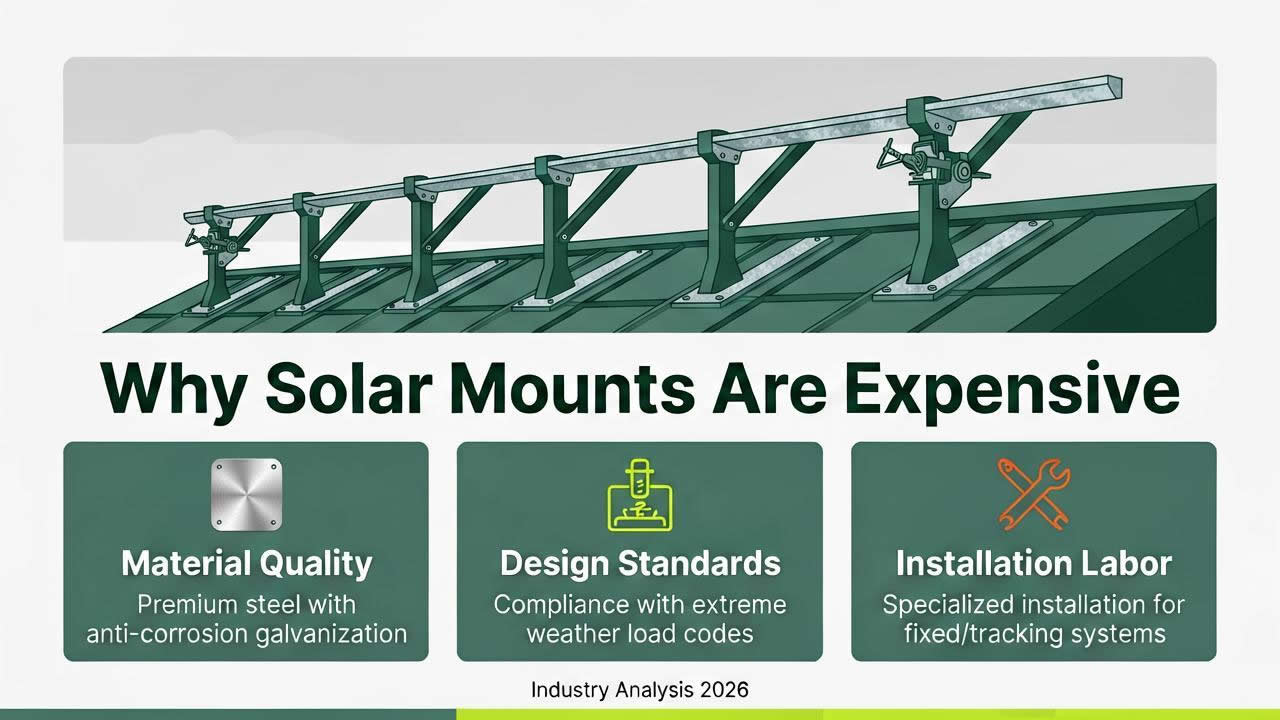
Material Costs: Far More Than Just “A Few Tons of Steel”
Let’s start with the most obvious part. Solar mounting systems don’t use ordinary angle iron; the mainstream solution is high-strength structural steel with a hot-dip galvanized magnesium-aluminum coating, with yield strengths routinely required to exceed 450 MPa.
The weather resistance and corrosion resistance of this material are worlds apart from the cold-rolled steel you can buy off the shelf at a building materials market. Moreover, for a proper tracking mounting system, the gearbox and motor of the rotation drive alone can account for 25%–30% of the total cost of the entire system. Add to that stainless steel fasteners, aluminum-magnesium alloy clamps, and vibration-damping washers—these small, miscellaneous parts often cost more than the main beams combined.
Don’t doubt it: the material cost for a single 1 MW fixed mounting system easily exceeds 200,000 RMB, while tracking systems can easily reach 400,000 RMB or more.
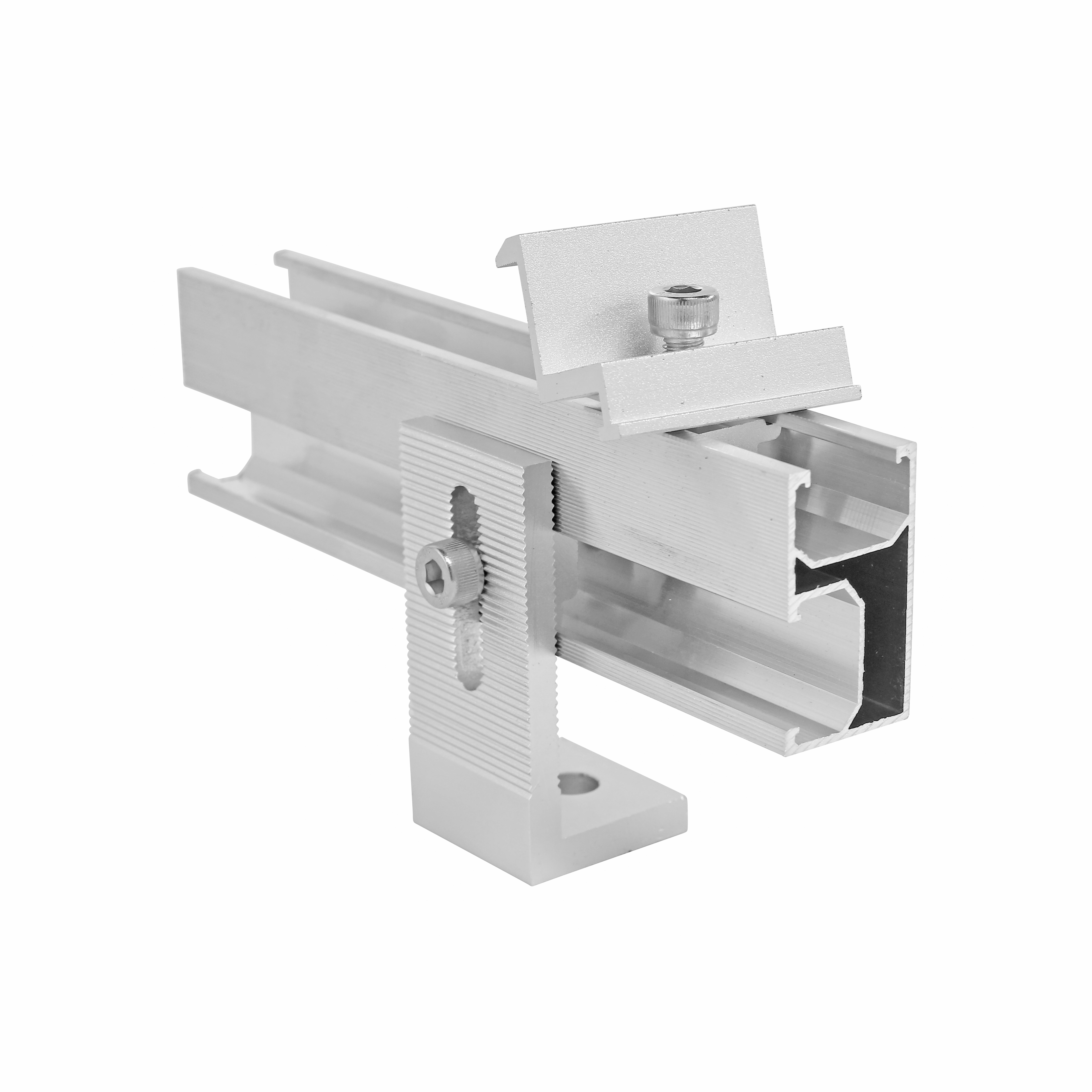
Engineering and Design: The Position of Every Bolt Is Carefully Calculated
This is perhaps the most easily overlooked aspect. On-site geological reports, wind and snow loads, seismic intensity, and pile foundation bearing capacity—all of these require structural engineers to meticulously analyze every single drawing. Especially in regions with extreme wind speeds, the spacing between the front and rear columns of the mounting system, the angles of the diagonal braces, and even the bolt preload must all undergo finite element analysis.
A reliable design team can produce over a hundred pages of structural calculation reports alone. This design fee isn’t calculated based on “how many drawings were produced,” but rather on “how much compensation would be required if the structure were to collapse.” If you think the design fees are expensive, it’s because you’ve never seen a whole row of modules blown over by the wind—that sight really keeps you up at night.
Installation and Labor: The Hardest Expense to Control
The materials have been purchased, and the drawings are ready, but the real money-eater is getting everything securely erected on the ground.
The setup and takedown fees for pile drivers, the curing period for concrete foundations, and safety measures for high-altitude work—each item represents actual man-hours. What’s even more of a headache is that if the site terrain is even slightly uneven, or if there are underground utility lines or rock layers, the construction crew has to make on-the-spot adjustments to the plan—and every change means overtime pay and material waste.
A skilled installation crew is considered highly efficient if it can install 200 kW in a day. Calculate the hourly labor rate and multiply it by the project duration—this cost easily accounts for 35%–45% of the total mounting system cost. Moreover, installation quality directly determines future O&M costs—if bolts aren’t tightened to the specified torque and loosen after six months, the repair costs will far exceed the installation costs.
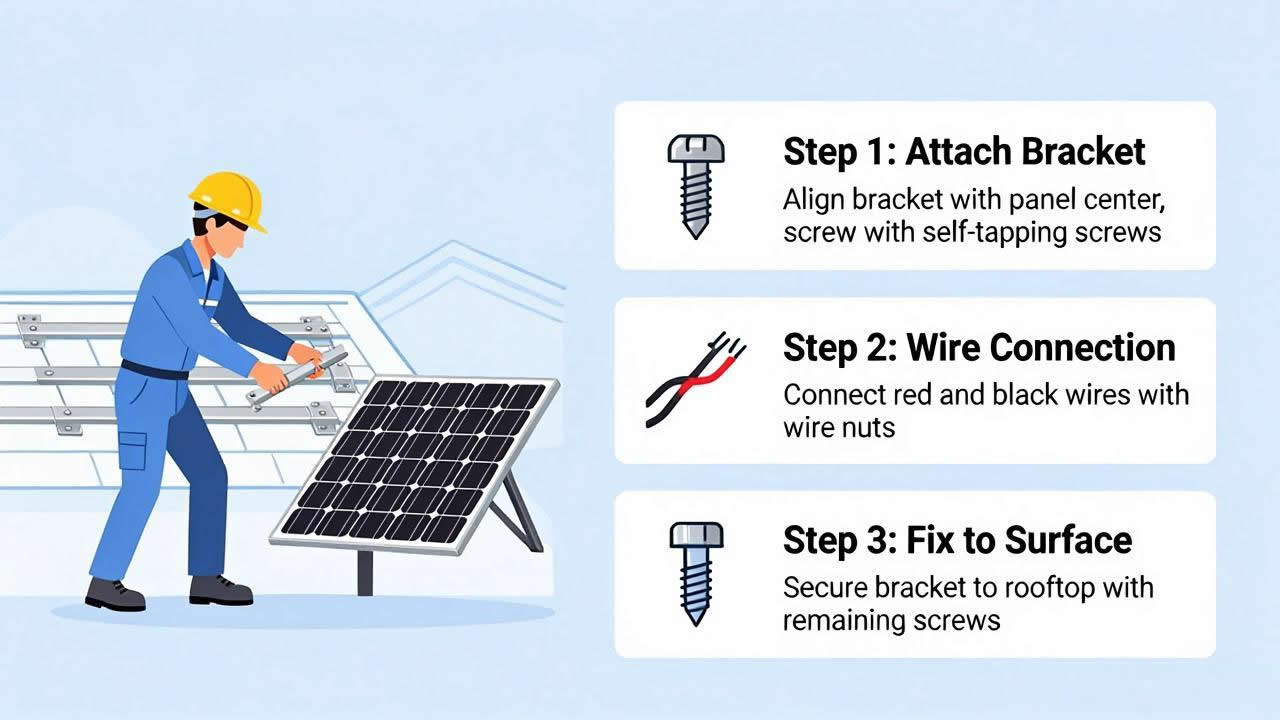
What exactly accounts for the price differences between various types of solar mounting systems?
Fixed mounting systems are the cheapest, costing just over 0.2 RMB per watt, and are suitable for flat terrain and high-wind areas. Fixed-adjustable mounts are slightly more expensive, but they can boost power generation by 5%–8%. During the spring and fall, when the angle needs to be adjusted, someone has to climb up to tighten the bolts, which drives up labor costs.
Single-axis tracking mounts are even more expensive, costing about 50 to 60 fen per watt. The cost stems from the drive system and control algorithms, but they can increase annual power generation by 15%–20% and are suitable for areas with high solar irradiance.
Dual-axis tracking mounts are even more expensive, costing over one yuan per watt, because they incorporate rotation mechanisms in two directions, GPS timing, and closed-loop control. To be honest, for most projects, a single-axis tracking system is already top-of-the-line; dual-axis systems have too long a payback period unless they’re for research or special terrain.
If you cut corners by buying cheap mounts, you’ll end up facing real financial pitfalls down the road.
I’ve seen far too many people try to save that 20% on mounting systems, only to end up with rusted posts, broken bolts, and hidden cracks in the modules two years later. You can’t see these hidden cracks with the naked eye, but they can cause a 5%–10% drop in power output.
What’s even more terrifying is that, in extreme weather, the welds on cheap mounting systems can simply break apart, causing an entire row of modules to topple like dominoes. At that point, you’ll not only have to cover the cost of the panels but also compensate for lost power generation—and possibly even pay for any cars parked below that were damaged. Moreover, low-cost mounting systems often lack comprehensive quality inspection reports; wall thickness can fall as low as -0.3 mm, and the galvanized coating thickness fails to meet standards. To put it bluntly, the money you save won’t even cover the call-out fee for a single crane rescue.
So how can you procure qualified, durable mounting systems?
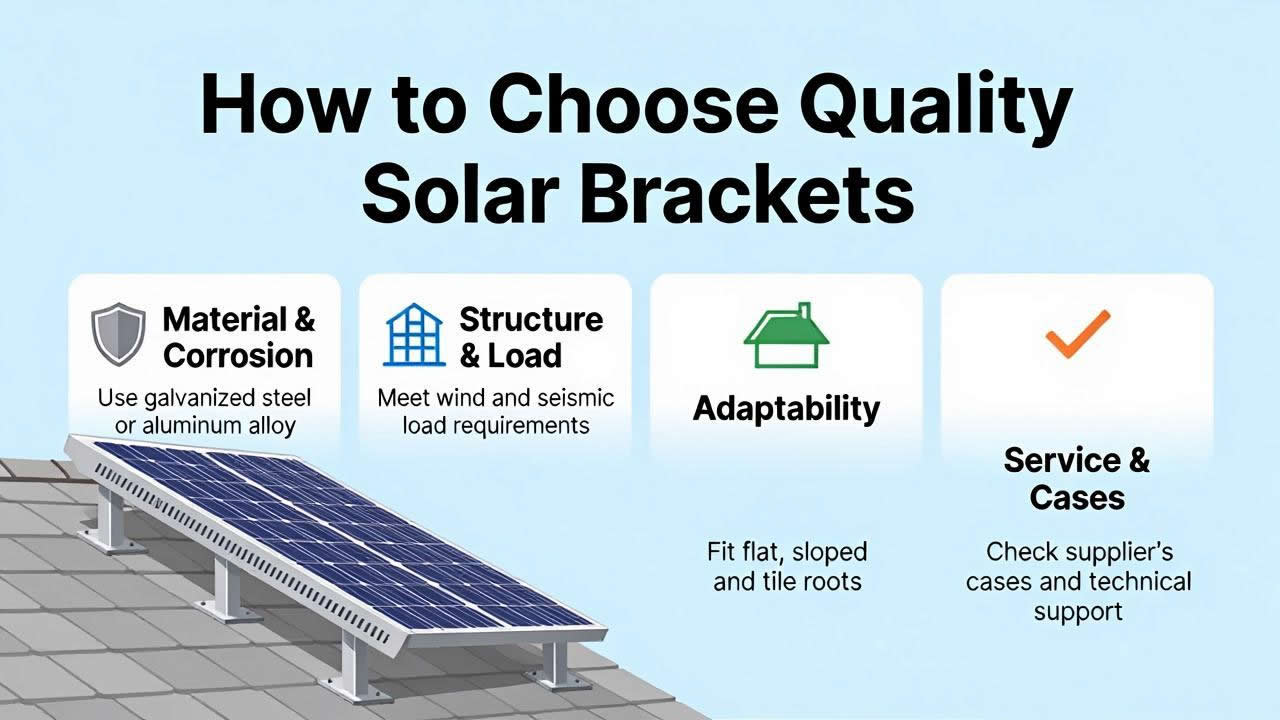
First, don’t just look at the unit price; consider the “turnkey delivery price for a complete, undamaged system.” Compare quotes that include shipping, foundations, installation, and commissioning as a package.
Second, require suppliers to provide third-party mechanical property test reports and salt spray test reports—don’t rely on verbal promises.
Third, visit their existing project sites, especially power plants that have been in operation for more than three years, to check for rust on bolts and settlement of the foundations. Fourth, the contract must clearly specify the material grade, galvanized coating thickness, bolt grade, and the percentage of welds subject to non-destructive testing.
Fifth, link payment milestones to installation acceptance; do not pay the full amount upon delivery. Finally, choose a manufacturer with a track record of supplying products for over ten years—even if it costs 5%–10% more, it’s worth the peace of mind.
Why I Recommend Yiteng
Yitenghas been in the
solar mounting system industry for nearly fifteen years. They developed their own tracking algorithms from scratch—they don’t rely on off-the-shelf solutions. All primary materials undergo double salt spray testing, and every batch of welds is subjected to ultrasonic testing before leaving the factory. Their on-site technical support team is actually capable of working alongside you at the construction site to level the foundation—they don’t just send drawings and wash their hands of the matter. That slight premium ensures twenty years without major issues.
Conclusion
Solar mounting systems are expensive, not because steel is expensive, but because of four key factors: reliable design, durable materials, meticulous installation, and comprehensive after-sales support—each of which comes at a cost. If you focus solely on the price per metric ton of steel, you’ll certainly find them expensive. But if you calculate based on “how many kilowatt-hours of electricity can be safely generated per watt per year,” the more expensive mounting systems actually turn out to be the most cost-effective. After all, a solar power plant is designed to operate for twenty-five years—not to be dismantled after just two years.
FAQ
1.How much does the payback period differ between fixed mounts and tracking systems?
Generally, single-axis tracking systems require a 40% higher initial investment than fixed mounts, but they increase power generation by 15%–20%. In areas with good sunlight, the payback period is only 1–1.5 years longer; after that, all additional earnings are pure profit.
2.Is a thicker mounting structure always better?
No. Thickness must be balanced with strength and corrosion protection design. Excessively increasing thickness only adds to the structure’s own weight and foundation costs. The key lies in the cross-sectional shape and rib arrangement—that’s a matter of structural optimization.
3.Are aluminum alloy mounting structures better than steel ones?
Aluminum alloy is lightweight and corrosion-resistant, making it suitable for rooftops and humid environments. However, it is less strong than steel and costs 30%–50% more. For ground-mounted power plants, steel mounting structures offer better value for money.
4.How can you determine if the quality of the galvanized coating on the mounting structures meets standards?
Use a galvanized coating thickness gauge to randomly test ten points; the average thickness must not be less than 65 micrometers (for a C3 corrosion environment), and the surface must be free of white rust or spots where the coating is missing.
5.Can the support structure’s design life reach 25 years?
Yes, provided that the materials, galvanization, bolt grade, and maintenance all meet the required standards. However, many low-cost support structures are actually designed for a 15-year lifespan, even though this isn’t specified in the contract. It’s best to explicitly require “a 25-year service life” in the technical agreement.


